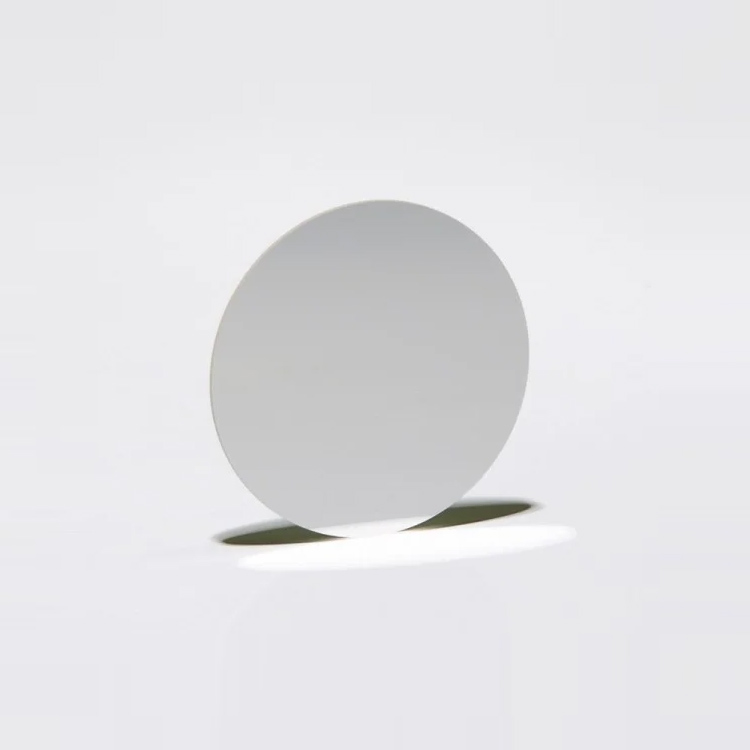
Coating Filter Glass is a specially treated optical filter primarily used to reduce surface reflections and enhance transmitted light intensity, thereby improving optical system performance. Typically, one or more transparent dielectric films—known as anti-reflective coatings—are deposited onto the filter surface.
Basic Principle of Coated Filters
The principle of anti-reflective coatings is based on the phenomenon of light interference. When light strikes an anti-reflective coating, if the film thickness equals one-quarter of the incident light wavelength, the reflected light undergoes interference on both sides of the film. This interference causes the reflected light to cancel each other out, thereby reducing the intensity of reflected light and increasing the intensity of transmitted light. This treatment reduces surface reflections on optical components, improves light transmittance, and consequently enhances the performance of optical systems.
Applications of Coated Filter Glass
Coated filter glass is utilized in various optical systems, particularly where high transmittance and low reflectance are required. Examples include:
Telescopes: Reduces ghosting in binoculars, enhancing contrast.
Eyeglass Lenses: Minimizes lens reflections, improving visual comfort.
Laser systems: Hard-coated filters are widely used in laser systems due to their high laser damage threshold.
TFT-LCD backlight modules: Color filters are essential components in TFT-LCD backlight modules.
Classification of Coated Filter Glass
Coated filter glass can be categorized based on spectral band, spectral characteristics, coating materials, etc.:
Spectral Band: Ultraviolet filters, visible filters, infrared filters.
Spectral Characteristics: Bandpass filters, bandstop filters, spectroscopic filters, neutral density filters, reflective filters.
Coating Material: Soft-coated filters and hard-coated filters.