

I. Substrate Preparation
Objective: Provide a clean, flat surface with high adhesion for subsequent coating processes.
Steps: Substrate selection, surface cleaning, activation, and treatment. Ensure the substrate material is suitable for coating, remove surface contaminants, and enhance adhesion between the coating and substrate.
II. Coating Process
Establishing Vacuum Conditions: Prior to coating, create a high-vacuum environment to minimize gas molecule interference and enhance coating quality.
Coating Technology Selection:
Evaporation Coating: Heats coating materials to vaporize them, then deposits the vapor onto the filter substrate within the vacuum environment. Evaporation techniques include thermal evaporation and electron beam evaporation. Electron beam evaporation enables precise control over evaporation rate and film thickness, making it suitable for coating high-melting-point materials.
Sputtering Coating: High-energy particles bombard a target material, causing atoms to sputter off and deposit onto the substrate. Sputtering produces films with excellent uniformity and strong adhesion, suitable for coating various materials.
Ion-assisted coating: An ion beam is introduced during deposition to bombard and modify the growing film, enhancing its structure and properties—such as improving film density and hardness.
Film Material Selection and Thickness Control: Select appropriate coating materials based on the optical performance requirements of the filter. Control film thickness by precisely regulating coating time and deposition rate.
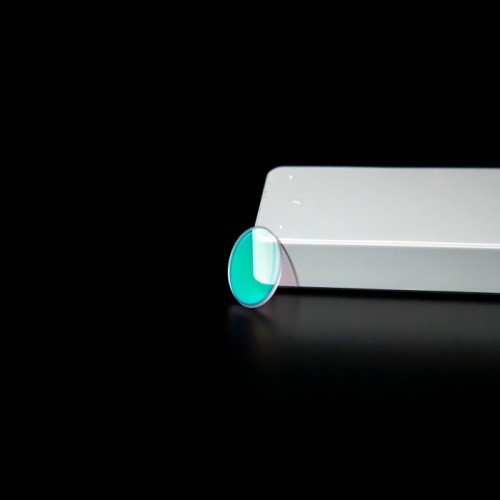
Subei Optics specializes in Optical Colored Filter Glass,Coating Filter Glass,and Transparent Glass Windiow.
III. Post-Processing Steps
Objective: Further optimize film stability and performance to ensure the finished product meets design specifications.
Steps: May include thermal treatment, film performance optimization, and final cleaning to enhance durability and optical characteristics.